
The government has revised gold import data, bringing down numbers for November by $5 billion to $9.84 billion, possibly to rectify double accounting of inbound shipments. According to revised data of the commerce ministry arm Directorate General of Commercial Intelligence and Statistics (DGCIS), gold import numbers have been slashed since April 2024, revealing excess imports of about $11.7 billion during the first eight months of 2024-25.

The commerce ministry has recommended the continuation of anti-dumping duty on a Chinese chemical used in food and pharma industry with a view to guard domestic players from cheap imports. In a notification, the ministry's investigation arm, the Directorate General of Trade Remedies (DGTR), has said there is a "positive" evidence of likelihood of dumping of Sodium Citrate and injury to the domestic industry if the existing anti-dumping duty were to be removed.
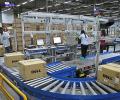
A task force set up by the Ministry of Electronics and Information Technology (Meity) for transforming India into an "electronic and semiconductor products" nation is on the verge of finalising its report, which is likely to recommend an allocation of Rs 44,000 crore between 2024 and 2030 to support homegrown companies in their quest to develop products and build global brands. The task force's recommendations include significant incentives: Rs 15,000 crore dedicated to electronic products (systems), Rs 11,000 crore for semiconductor products, and Rs 18,000 crore for various other incentives such as talent development, common infrastructure, logistics, and technology & IP (intellectual property) acquisition, a member of the panel revealed.

What stood out in his 15-year journey as a member of the political executive at the Centre was his glowing record as India's most successful and effective finance minister. Both as prime minister and finance minister, he understood the importance of gradualism, except when the economy or the polity was in a crisis.

Anticipating US action on tariffs, India seems to have made the first move by revamping its tariff structure by reducing the slabs to eight rates, points out Mukesh Butani.

Prime Minister Narendra Modi and French President Emmanuel Macron have called for enhancing trade and investment ties between their countries and committed to further deepening their engagement in the Indo-Pacific. They discussed a full spectrum of bilateral relations, including key global and regional issues, and stressed the urgent need for reform in the United Nations Security Council. The leaders also underscored their commitment to ensuring the global AI sector can drive positive social, economic, and environmental outcomes.

Indo-Canadian Anita Anand and Delhi-born Kamal Khera are part of new Canadian Prime Minister Mark Carney's cabinet. Anand is the Minister of Innovation, Science and Industry while Khera is Minister of Health. Carney's cabinet with 13 men and 11 women is smaller than Trudeau's 37-member team.

The ministry of information and broadcasting (I&B) on Wednesday held an inter-ministerial meeting with various departments to discuss issues regarding revenue sharing between Big Tech companies and digital news publishers, according to sources. The meeting - chaired by I&B Secretary Sanjay Jaju - invited senior officials from the ministry of corporate affairs (MCA), Competition Commission of India (CCI), ministry of electronics and information technology (Meity) and departments of promotion of industry and internal trade, legal affairs and consumer affairs.
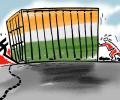
The government on Friday came out with Foreign Trade Policy (FTP) 2023 which seeks to boost the country's exports to $2 trillion by 2030 by shifting from incentives to remission and entitlement based regime. Unlike the practice of announcing 5-year FTP, the latest policy has no end date and will be updated as and when needed, said Director General of Foreign Trade (DGFT) Santosh Sarangi while briefing media about FTP 2023. Earlier, Commerce and Industry Minister Piyush Goyal unveiled FTP 2023 which will come into effect from April 1, 2023.

The government is planning to tweak its procurement policy to give a fillip to domestic manufacturing. The industry department has floated a proposal to raise the minimum local content requirement for public procurement for Class-I and -II suppliers from 50 per cent currently to 70 per cent, and 20 per cent as of now to 50 per cent, respectively.

The Union Finance Ministry on Friday announced key amendments to foreign exchange (forex) regulations, including mandating government approvals for all investments originating from countries that share land borders with India. The latest amendments also seek to simplify cross-border share swaps and streamline key definitions, such as "control". The updated regulations have aligned the treatment of downstream investments made by overseas citizen of India (OCI)-owned entities with those owned by non-resident Indians (NRIs) on a non-repatriation basis.

To burnish production-linked incentive (PLI) schemes, the government is considering an overhaul of some of them relating to sectors such as textiles and pharma, and making incentive payments quarterly, officials in the know said. In a bid to cut the delay in processing incentive claims, the government is looking at switching to a quarterly disbursement of incentives. Currently, in most schemes, incentives are annual.

India described as "inaccurate" a media report that said artillery shells sold by Indian arms manufacturers have been diverted by European customers to Ukraine and New Delhi has not intervened to stop it.

The Union government will soon make amendments to the foreign trade policy (FTP) to enable exporters to claim export benefits for settling trade in rupees. These benefits are, so far, available for export payments received in foreign currencies. After the Reserve Bank of India (RBI) unveiled a mechanism to settle international trade transactions in the local currency on Monday, exporters have been demanding that the Ministry of Commerce and Industry come up with a clarification on the matter.

The Modi government's flagship initiative 'Make in India' launched 10 years ago has helped the country boost exports, push investments and promote manufacturing. Under the initiative, launched on September 25, 2014, a series of measures have been taken by the government to boost local manufacturing. These initiatives include the rollout of production linked incentive (PLI) schemes for 14 sectors, easing foreign direct investment (FDI) norms, reducing compliance burden to improve business climate, all approvals through single window, and rolling out of the national logistics policy.

In reflection of their growing congruence in areas of defence and security, the two sides, following the Modi-Mitsotakis talks, agreed to set up an institutional dialogue at the level of national security advisors, and boost defence industrial cooperation.

The government on Tuesday announced setting up of hubs to promote exports through e-commerce medium in public-private-partnership (PPP) mode and initially 10-15 hubs will be established. Finance Minister Nirmala Sitharaman said that these hubs, under a seamless regulatory and logistic framework, will facilitate trade and export-related services under one roof. "To enable MSMEs (micro, small and medium enterprises) and traditional artisans to sell their products in international markets, e-commerce export hubs will be set up in PPP mode," she said.

The government is working towards setting up an international diamond trading centre in the country and is keen to encourage investment by Indians in diamond mines abroad, Union Minister of Commerce and Industry Kamal Nath said on Tuesday.
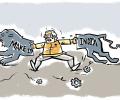
The Department for Promotion of Industry and Internal Trade (DPIIT) has proposed to raise the minimum local content under public procurement order in government contracts. But several local suppliers and multinational companies (MNCs) are saying such a steep target is not attainable. Class-I suppliers, whose goods, services or works offered for procurement has local content equal to or more than 50 per cent may see it hiked to 70 per cent, while it may go up to 50 per cent from 20 per cent for Class-II suppliers.

India has reduced the time period for foreign investors to seek international arbitration from five years to three years as part of the recently signed investment pact with the United Arab Emirates (UAE), a departure from its model Bilateral Investment Treaty (BIT). Under the Investor-State Dispute Settlement (ISDS) mechanism, if the Indian judicial system is unable to resolve a dispute within this shortened period, investors can resort to international arbitration. The investment pact, signed on February 13 in Abu Dhabi, came into force on August 31, replacing the previous pact.

From highways connecting once-remote regions to aviation networks carrying millions, India's infrastructure story is one of transformation.

The two countries also signed a 'Memorandum of Agreement regarding the Assignment of Liaison Officers', which will facilitate the posting of one military officer from each country with the military of the other.

India and the US on Thursday said they are looking forward to the reconvening of the India-US Trade Policy Forum later this year to further enhance trade relationship and identify new areas for engagement.

It will be the second Budget of the Modi 3.0 government and eighth straight Budget for Nirmala Sitharaman, rare in Indian polity.
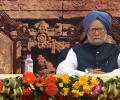
'He will be remembered more for what he did as finance minister -- as someone who functioned well when the political fallout was taken care of.'

Industrial disputes dropped 89.3 per cent to 34 in 2022 compared to 318 a decade ago, shows central and state data.
The total incentive outgo under the ambitious production-linked incentive (PLI) scheme is estimated to be less than Rs. 40,000 crore by the fiscal year 2024-25 (FY25), when it completes the fourth year of implementation, according to the government's internal estimates. This means only a fourth of the allocated Rs 1.97 trillion is expected to be utilised by the end of FY24, indicating that not all the 14 PLI schemes would have taken off fully. While three of the 14 schemes - large-scale electronics manufacturing, bulk drugs, and medical devices - were introduced in 2020, the remaining were launched the following year.

India remains North Korea's 2nd-largest import source after China, according to several estimates by multilateral bodies, says Subhayan Chakraborty.

Work on a dozen decisions to start by next week.

India is planning to soon sign new and updated mineral pacts with about a dozen countries in Africa. The Ministry of Mines is in discussions with Cte d'Ivoire, Democratic Republic of the Congo (DRC), Madagascar, Malawi, Mali, Morocco, Mozambique, South Africa, Tanzania, Zambia and Zimbabwe, Business Standard has learnt. Negotiations are ongoing with around a dozen countries, and more will be added to the list soon.

International oil prices continue to be extremely volatile, falling on one day and rising thereafter, a top oil ministry official said explaining the reason behind no reduction in petrol and diesel prices despite softening in input cost, but could not say if the rates will be cut before Maharashtra elections. Global oil benchmark Brent crude futures fell below $70 per barrel last week -- the first time since December 2021 -- but gained thereafter. Brent was trading at $74.58 per barrel on Thursday while West Texas Intermediate advanced to trade at $71.71.

China has approved the construction of the world's largest dam on the Brahmaputra River in Tibet, close to the Indian border. The USD 137 billion project, which is expected to dwarf even China's own Three Gorges Dam, has raised concerns in India and Bangladesh, the downstream riparian states. Concerns in India are centered around China's potential to control water flow, potentially enabling the release of large amounts of water to flood border areas in times of hostilities. The dam is part of China's 14th Five-Year Plan, and the Chinese government claims that the project is safe and prioritizes ecological protection.
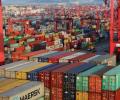
Imports too tumbled by 58.65 per cent to $17.12 billion in April from $41.4 billion in the same month last year, according to the data by the commerce and industry ministry.

The report highlights that India's population in 2036 is expected to be more feminine compared to the 2011 population, as reflected in the sex ratio which is projected to increase from 943 in 2011 to 952 by 2036, highlighting a positive trend in gender equality.

In its new avatar as the Department for Promotion of Industry and Internal Trade (DPIIT), it will directly be responsible for 'the welfare of traders and their employees'.

To boost domestic manufacturing under the Make in India initiative and reduce dependency on imports, the government is expected to announce in the Budget an increase in the minimum local content requirement for public procurement, with certain sectors being granted exceptions. Currently, firms producing goods, services, or works with at least 50 per cent local content are classified as Class-I local suppliers and are preferred the most in government procurement.

In the Union Budget for Financial Year 2023-24 (FY24), Finance Minister Nirmala Sitharaman had held forth on the need for better governance and investor protection in the banking sector. She had proposed certain amendments to the Reserve Bank of India Act (RBI Act), 1934; the Banking Regulation Act (BR Act), 1949; and the Banking Companies (Acquisition and Transfer of Undertakings) Act, 1970.

'With just 2.4 per cent of global landmass, India houses six to eight per cent of planetary biodiversity and hence is a prime target of wildlife criminals.'

The department for promotion of industry and internal trade (DPIIT) has suggested to the home ministry to allow limited activity in certain sectors such as heavy electricals and telecom equipment with reasonable safeguards. In a letter to Home Secretary Ajay Kumar Bhalla, the department said that these activities are essential to improve the economic situation and provide liquidity in the hands of the people.
 © 2026 Rediff.com - Advertise with us - Disclaimer - Privacy Policy - Sitemap - Feedback - About us - Terms of use - Grievances